The environmental microscope is engineered to deliver consistent performance at all magnification levels. With precision focusing knobs and a rugged mechanical stage, it offers accurate sample positioning and smooth handling. The illumination system provides even lighting for clear observation of opaque and transparent specimens. Most environmental microscope models have modular configurations, which can be customized for particular fields like biology, metallurgy, or semiconductor inspection.

The environmental microscope is critical to science and manufacturing advancement. In the medical research arena, the environmental microscope aids microscopic blood and tissue testing for accurate diagnostics. Research institutions use the environmental microscope in cell culture analysis, detecting bacterial growth, and research on biofilms. Industrial laboratory environments utilize the environmental microscope for product quality assurance and surface finishes evaluation. The environmental microscope is also applied in environmental science to support monitoring of plankton populations and particles of pollutants, to enhance ecological studies and sustainability science.

Future environmental microscope will be efficient, readable, and networked. Advanced digital imaging technology will provide sharper output with less noise in the data. Machine learning enhancements will speed up measurements and classification. The environmental microscope may also have multi-spectral imaging modes so that users can better analyze chemical mixtures. Interactive visualisation and remote control capabilities will allow several people to utilize the same environmental microscope remotely at different locations, changing how microscopic research is conducted.
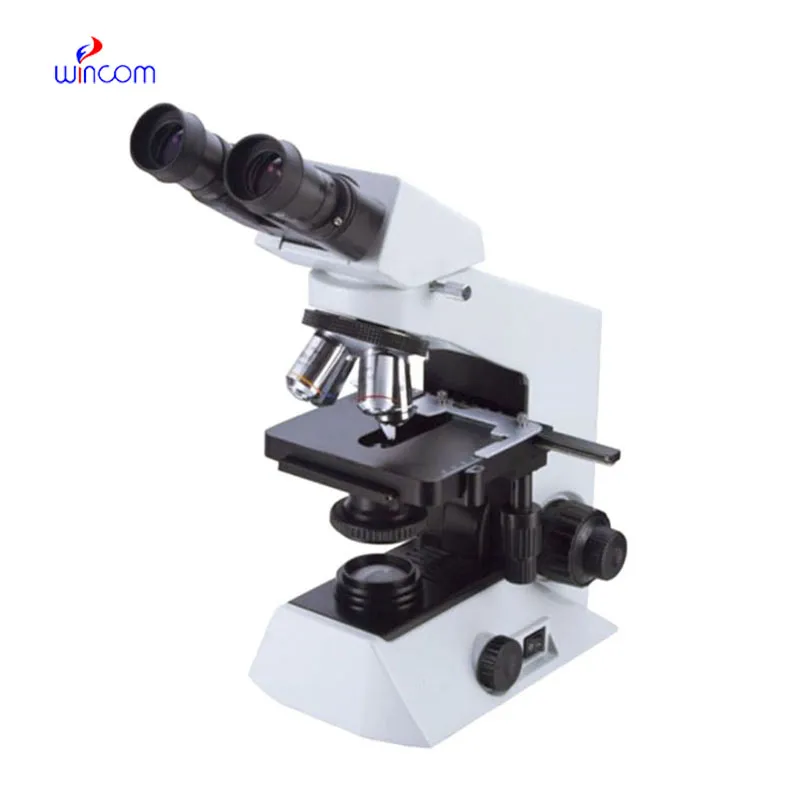
Proper care and maintenance of the environmental microscope ensure long-term performance and image precision. Lenses should be cleaned periodically with lens paper or optical wipes to prevent dust buildup leading to distortion in clarity. Mechanism parts and the stage should be clear of debris and dry. After use, the environmental microscope should be dust-shielded and kept low humidity. Verify the lighting system every now and then and change bulbs or LEDs when brightness declines. Calibration and adjustment by professionals guarantee accuracy and mechanical solidity are maintained at constant levels.
A environmental microscope is a convenient tool that magnifies microscopic materials that are invisible to the naked eye. It allows researchers, scientists, and students to view cells, microorganisms, and sensitive materials with careful attention at microscopic sizes. Modern environmental microscope models combine optical precision with electronic technology to give high-definition images and fine focusing. They are widely applied in biology, medicine, and material sciences for research, study, and instruction. With high-performance lenses and illumination systems, a environmental microscope enhances visualization to enable users to examine texture, shape, and structure at the microscopic level with utmost clarity and accuracy.
Q: What is a microscope used for? A: A microscope is used to magnify tiny objects or structures, allowing detailed observation of cells, microorganisms, and materials that are invisible to the naked eye. Q: How often should a microscope be calibrated? A: To maintain measurement accuracy and ensure accurate focus during research or analysis, regular calibration should be performed, typically once or twice a year. Q: What type of light source is commonly used in a microscope? A: Most modern microscopes use LED or halogen light sources, which provide stable light and adjustable brightness for clear images at a wide range of magnifications. Q: Can a microscope be connected to a computer? A: Yes, many microscope models feature USB or HDMI ports that allow image capture and digital display through specialized imaging software. Q: How should a microscope be stored when not in use? A: A microscope should be covered with a dust shield and stored in a cool, dry location to prevent contamination and protect optical components from humidity.
The hospital bed is well-designed and very practical. Patients find it comfortable, and nurses appreciate how simple it is to operate.
The water bath performs consistently and maintains a stable temperature even during long experiments. It’s reliable and easy to operate.
To protect the privacy of our buyers, only public service email domains like Gmail, Yahoo, and MSN will be displayed. Additionally, only a limited portion of the inquiry content will be shown.
We’re looking for a reliable centrifuge for clinical testing. Can you share the technical specific...
Hello, I’m interested in your water bath for laboratory applications. Can you confirm the temperat...
E-mail: [email protected]
Tel: +86-731-84176622
+86-731-84136655
Address: Rm.1507,Xinsancheng Plaza. No.58, Renmin Road(E),Changsha,Hunan,China


 EN
 af
 es
 ar
 tr
 sw
 pt
 th
 ur
 bn
 ne
 vi
 km
 lo
 de
 ru
 fi
 nl
 fa
 fr
 ko