patient bedside monitor in hospitals offers integrated monitoring features to track heart rhythms and vital signs. The apparatus is intended to maintain a stable data stream and an easily readable output, which allows for good clinical assessment. Its deployment in different hospital units bolsters the constant monitoring process and facilitates uniform patient watching during the different phases of treatment.

patient bedside monitor is being used in cardiac diagnostic departments for the purpose of short-term monitoring and diagnosis. ECG recordings are very helpful in making the cardiovascular evaluation during testing and follow-up visits. This particular use of the technology helps the doctors to gather organized heart data in a controlled environment which in turn helps the diagnostic processes in the hospital.
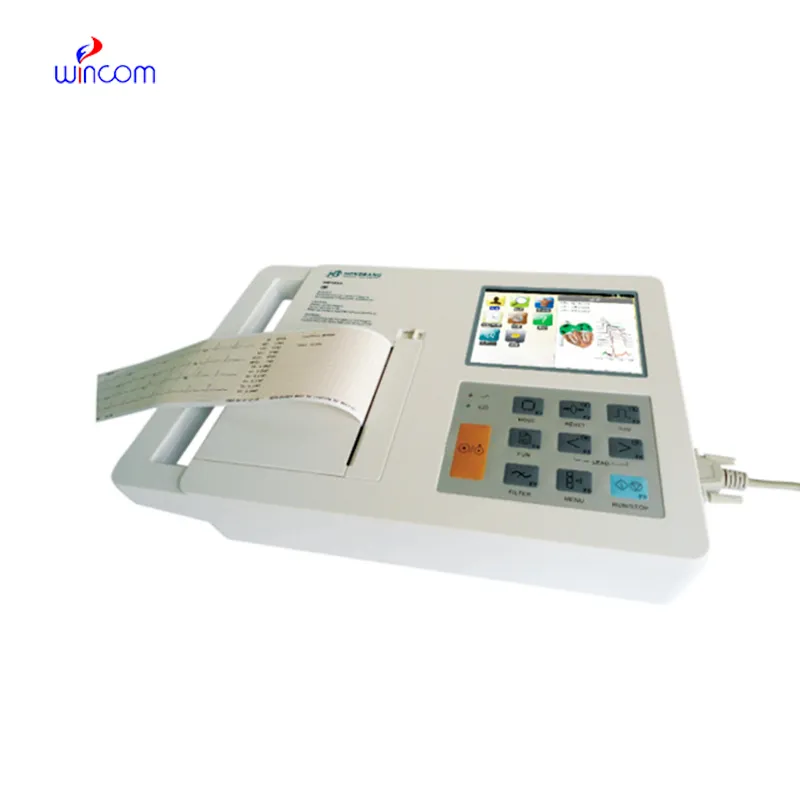
The future of patient bedside monitor will be characterized by better data security and traceability features. The secure storage and limited access to ECG records will aid in compliance with regulations and the protection of patient data. Such advancements will support the credibility of digital monitoring systems in hospitals and clinical laboratories.
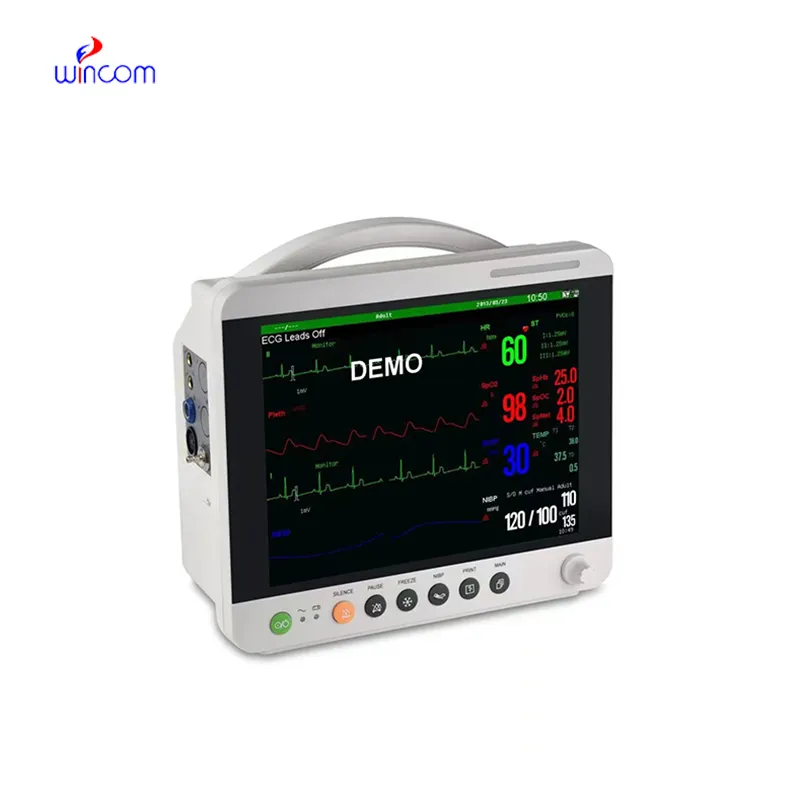
The correct handling and storage methods are vital to the durability of patient bedside monitor. Do not put the device close to water or sun, and manage the cables well to prevent any tension. The points where the sensors are attached should be looked into for corrosion or disconnection often. Carrying out periodic internal diagnostics and software checks will make sure that ECG recording and vital sign monitoring are stable. These maintenance activities will, in turn, ensure the uniform performance of the device throughout hospitals, labs, and emergency departments.
In hospital patient care areas and emergency rooms, patient bedside monitor is a common practice for quick patient evaluation. Constant ECG monitoring enables medical personnel to see variations in heart rhythm simultaneously. Such a feature is vital in critical care, post-surgery monitoring, and everyday patient observation. The use of patient bedside monitor in hospital processes increases medical awareness and facilitates prompt decision-making in all nursing care areas.
Q: What are the different kinds of signals that a Patient Monitor & ECG can identify? A: It identifies electrical cardiac signals, heart rate, arrhythmias, and often additional vital signs. Q: In what way does a Patient Monitor & ECG facilitate surgical interventions? A: It guarantees uninterrupted monitoring of the heart's activity during anesthesia and surgery. Q: Should one undergo training in order to use the Patient Monitor & ECG device? A: A very basic training course will make sure the ECG waveforms are interpreted correctly and the device is handled well. Q: Is there a possibility to connect it with hospital information systems? A: Yes, quite a number of models provide the possibility of connecting for the purpose of centralized data monitoring and analysis. Q: What is the maximum duration for which a Patient Monitor & ECG can be used without stopping? A: Generally, the manufacturers of the most devices design them to be used for the long term with the right maintenance and power management.
The hospital bed is well-designed and very practical. Patients find it comfortable, and nurses appreciate how simple it is to operate.
We’ve used this centrifuge for several months now, and it has performed consistently well. The speed control and balance are excellent.
To protect the privacy of our buyers, only public service email domains like Gmail, Yahoo, and MSN will be displayed. Additionally, only a limited portion of the inquiry content will be shown.
I’d like to inquire about your x-ray machine models. Could you provide the technical datasheet, wa...
Hello, I’m interested in your centrifuge models for laboratory use. Could you please send me more ...
E-mail: [email protected]
Tel: +86-731-84176622
+86-731-84136655
Address: Rm.1507,Xinsancheng Plaza. No.58, Renmin Road(E),Changsha,Hunan,China


 EN
 af
 es
 ar
 tr
 sw
 pt
 th
 ur
 bn
 ne
 vi
 km
 lo
 de
 ru
 fi
 nl
 fa
 fr
 ko