serum blood collection tubes meet strict standards for both clinical and laboratory use. Every tube is made to exact specifications thus having the same volume and the same chemical composition. The hospitals always have accurate blood collection for diagnostic tests, which are hematology, coagulation, and clinical chemistry. The sterile, pre-sealed design minimizes the risk of contamination at the same time , the sample remains stable. The color-coded caps help staff to identify quickly. By helping both automated and manual laboratory procedures, serum blood collection tubes have a positive impact on workflow efficiency, make testing more accurate, and keep patient safety throughout hospital departments.

In clinical research blood samples for molecular biology, genetic studies, and biomarker analysis are collected with the use of serum blood collection tubes. Their sterile construction keeps DNA, RNA and proteins alive during transport and storage. Laboratories employ these tubes to hold the required chemical environments for advanced analytical techniques no more and no less than their precision. The uniform volume along with pre-measured additives minimizes the variability of sample quality, thus increasing the reproducibility of experimental results. Research with serum blood collection tubes allows hospitals and laboratories to carry out high-quality studies while securing patient safety, sample integrity, and consistent laboratory outcomes for clinical or scientific applications.
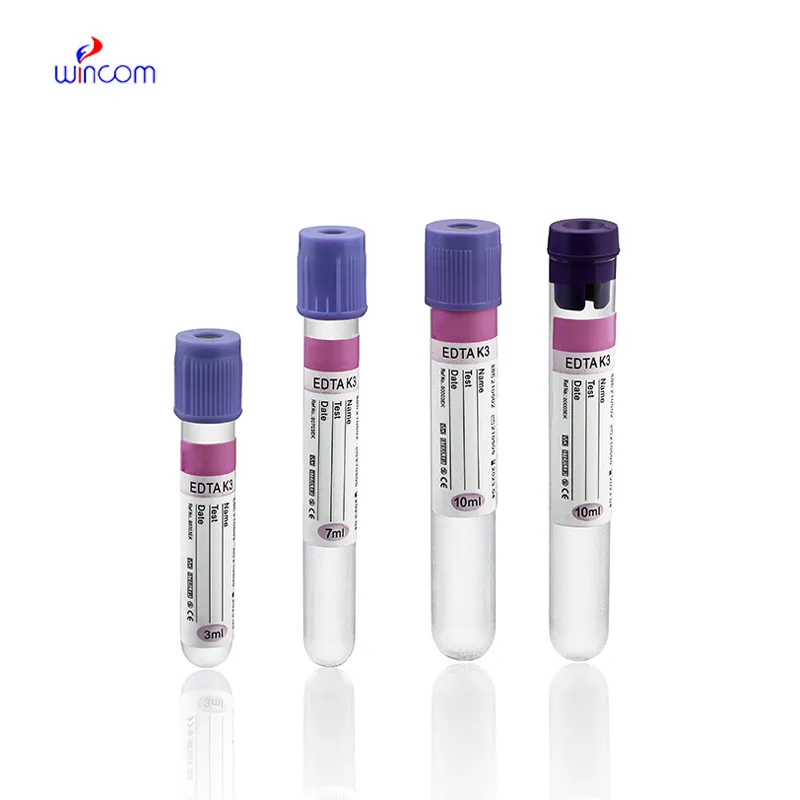
In hospitals, the sophisticated serum blood collection tubes might consist of immediate data transfer, which would make it possible for the laboratory information systems to observe the conditions of the collection and transportation of the samples remotely. The tubes could manage to deliver data regarding the temperature, shaking, and duration, thus maintaining the sample's integrity prior to analysis. The combination with automation will lead to a decrease in the handling and error rates. The next serum blood collection tubes will offer digital connectivity along with the use of superior materials and pre-measured additives, which will improve the communication between the laboratory and the physicians, the safety of the patients, and the reliability of the diagnosis. The hospitals will depend on the use of these tubes for the optimization of laboratory operations, the support of high-throughput testing, and the delivery of clinical results that are traceable and reproducible.

The knowledge and care of serum blood collection tubes involve all that goes along with its proper handling and awareness among the staff. Hospitals usually adopt standard practices such as the proper handling, checking, and discarding of tubes in their operations. Reusing and altering tubes is a very dangerous practice as it affects both sterility and precision. Regular cleaning of storage surfaces is important to eliminate dust build-up. Besides, laboratories might carry out regular inspections to check if the packaging is still unbroken. When the proper care practices are applied consistently, serum blood collection tubes are still dependable instruments for the precise blood draw in both regular testing and specialized diagnostic applications.
In outpatient clinics, serum blood collection tubes are used to take blood samples for laboratory tests that are performed routinely, including cholesterol levels, glucose monitoring, and hormone panels, among others. The tubes' pre-measured additives help to get uniform results and at the same time, lessen the handling errors. Clinic employees are relying on the performance of these tubes as being dependable for both short-term and long-term patient monitoring. The correct application of serum blood collection tubes keeps each sample intact while being transported to hospital laboratories. Their ease of use, uniformity, and compatibility with laboratory analyzers come together to make them an essential tool in everyday clinical practice and patient diagnostics.
Q: What is the purpose of Blood Collection Tubes in emergency departments? A: The main function is to facilitate quick and secure blood collection for urgent diagnostic tests. Q: Are Blood Collection Tubes suitable for infants and children? A: Absolutely, there are specialized smaller-volume tubes for both pediatric and neonate applications. Q: What is the procedure when a Blood Collection Tube gets broken? A: The broken tubes cannot be used and should be disposed of per the hospital's rules. Q: Will Blood Collection Tubes leak if there is an accident? A: Leakage during handling and transport is minimized through the secure caps that are designed for these tubes. Q: What methods do hospitals use for tracking Blood Collection Tubes? A: A number of hospitals are using either labeling or barcode systems for sample identification and traceability.
The centrifuge operates quietly and efficiently. It’s compact but surprisingly powerful, making it perfect for daily lab use.
This x-ray machine is reliable and easy to operate. Our technicians appreciate how quickly it processes scans, saving valuable time during busy patient hours.
To protect the privacy of our buyers, only public service email domains like Gmail, Yahoo, and MSN will be displayed. Additionally, only a limited portion of the inquiry content will be shown.
Hello, I’m interested in your water bath for laboratory applications. Can you confirm the temperat...
We’re currently sourcing an ultrasound scanner for hospital use. Please send product specification...
E-mail: [email protected]
Tel: +86-731-84176622
+86-731-84136655
Address: Rm.1507,Xinsancheng Plaza. No.58, Renmin Road(E),Changsha,Hunan,China


 EN
EN
 af
af
 es
es
 ar
ar
 tr
tr
 sw
sw
 pt
pt
 th
th
 ur
ur
 bn
bn
 ne
ne
 vi
vi
 km
km
 lo
lo
 de
de
 ru
ru
 fi
fi
 nl
nl
 fa
fa
 fr
fr
 ko
ko