vital sign monitors is a device for multi-parameter monitoring which has been specifically designed for continuous and extensive observation of the patient's health condition. It is made by merging the ECG function with other physiological measurements and as a result, it provides structured clinical data that is good for hospital usage. The medical staff is very much dependent on its reliable performance in order to keep track of the patient’s condition through the different stages of treatment. The device is versatile enough to be used in different clinical settings of the healthcare institutions.

vital sign monitors is being used in cardiac diagnostic departments for the purpose of short-term monitoring and diagnosis. ECG recordings are very helpful in making the cardiovascular evaluation during testing and follow-up visits. This particular use of the technology helps the doctors to gather organized heart data in a controlled environment which in turn helps the diagnostic processes in the hospital.
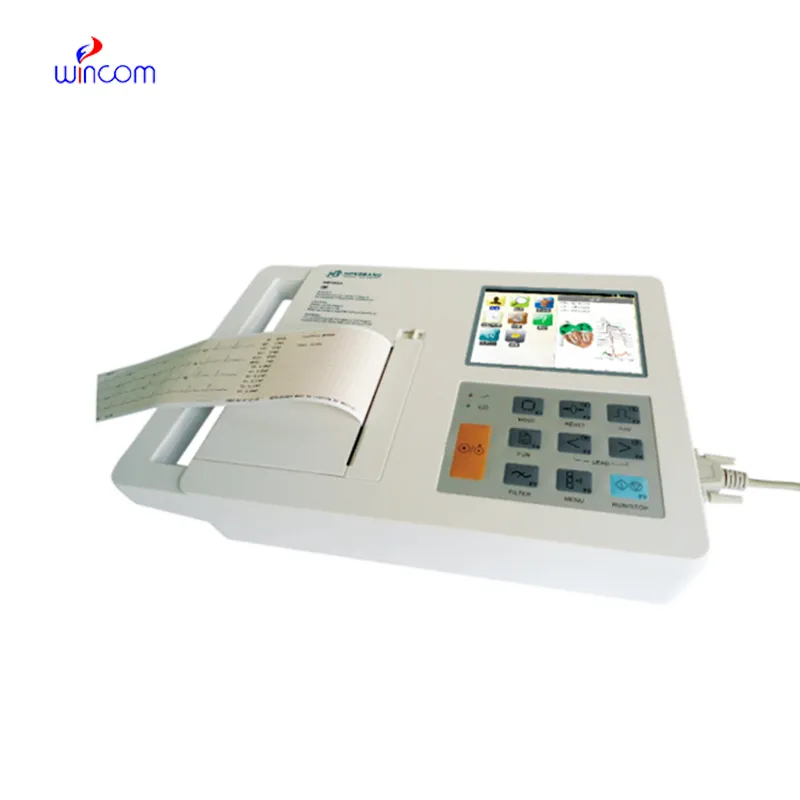
Eventually, vital sign monitors will be considered as a vital part of integrated patient management platforms in the long run. The ongoing ECG data will play a major role in forming all-inclusive physiological profiles that will aid in the great collaboration of medical practitioners. This change will reinforce patient monitoring methods in the current healthcare systems.
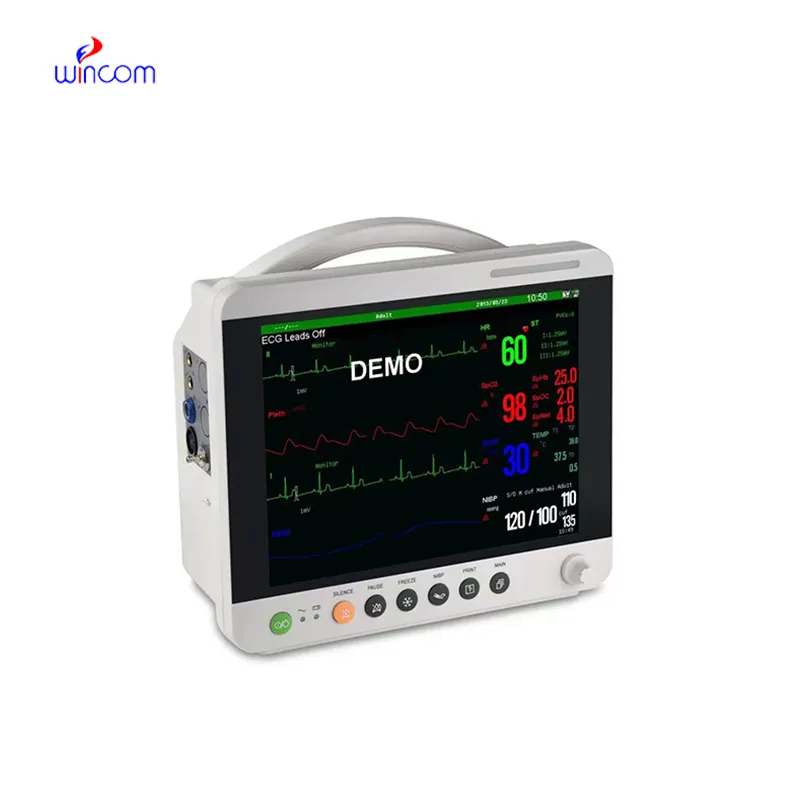
The regular upkeep of vital sign monitors comprises the cleaning of outer surfaces, the checking of electrode quality and the viewing of connection cables. It is also necessary to update the device's firmware and software to retain compatibility and accuracy of alarms. In addition, the environmental factors such as room temperature and electromagnetic radiation should be closely watched to avoid any interference with data. By following the systematic maintenance protocols, the hospital personnel make sure that vital sign monitors provides accurate and reliable monitoring of patients in different places like wards, recovering units, and laboratories, supporting the uninterrupted observation by the clinical staff.
In clinical research and laboratory-based medical studies, vital sign monitors serves as a means for physiological data collection and analysis. The ECG recording functions enable the researchers to record the heart activities under controlled conditions. This data is used for cardiovascular studies, treatment evaluation, and medical training programs. vital sign monitors is improving the reliability of research in hospital-based laboratories and academic medical centers by providing stable and accurate measurements.
Q: How often should ECG electrodes be replaced? A: Signal detection accuracy depends on the regular replacement of electrodes. Q: Can a Patient Monitor & ECG be used in neonatal care? A: Certainly, the use of specialized sensors allows safe monitoring of newborns and infants. Q: Does a Patient Monitor & ECG provide alarm functions? A: Alarms are indeed present, with notifications sent to the staff in case of abnormal heart rates or any other vital sign changes. Q: Can it record trends over time? A: It can indeed show historical data for patient analysis and clinical evaluation. Q: Is maintenance required for a Patient Monitor & ECG? A: Long-term performance and accuracy depend on regular maintenance and cleaning which are appropriate for the equipment.
The delivery bed is well-designed and reliable. Our staff finds it simple to operate, and patients feel comfortable using it.
The centrifuge operates quietly and efficiently. It’s compact but surprisingly powerful, making it perfect for daily lab use.
To protect the privacy of our buyers, only public service email domains like Gmail, Yahoo, and MSN will be displayed. Additionally, only a limited portion of the inquiry content will be shown.
Hello, I’m interested in your water bath for laboratory applications. Can you confirm the temperat...
We are planning to upgrade our imaging department and would like more information on your mri machin...
E-mail: [email protected]
Tel: +86-731-84176622
+86-731-84136655
Address: Rm.1507,Xinsancheng Plaza. No.58, Renmin Road(E),Changsha,Hunan,China


 EN
EN
 af
af
 es
es
 ar
ar
 tr
tr
 sw
sw
 pt
pt
 th
th
 ur
ur
 bn
bn
 ne
ne
 vi
vi
 km
km
 lo
lo
 de
de
 ru
ru
 fi
fi
 nl
nl
 fa
fa
 fr
fr
 ko
ko